

Reducing carbon emissions
Contributing to a thriving environment
In 2019, Adur & Worthing Councils declared a climate emergency. We committed to becoming a carbon neutral organisation by 2030 and helping Adur and Worthing become a net zero area by 2045. These are two related but distinct ambitions:
- 2030 - our operations: reduce and, where necessary, offset emissions from the activities we control, including our buildings, vehicles and operations.
- 2045 - Adur and Worthing: work with residents, businesses, communities and partners to reduce emissions across the whole area, including emissions from homes, transport and businesses.
What does carbon neutral mean?
Being carbon neutral means balancing the carbon dioxide emissions we produce by first reducing emissions as far as possible and then addressing any remaining emissions through appropriate measures, such as planting trees or collecting renewable energy.
Our work contributes to wider climate targets at global, national and local level.
Climate targets
- Global: The international goal is to limit global warming to 1.5°C, helping to reduce the most damaging impacts of climate change. For more information, see:
- UK: The UK has committed to reaching net zero greenhouse gas emissions by 2050, with a target to reduce emissions by 78% by 2035 compared with 1990 levels.
- Adur & Worthing Councils: We aim to be carbon neutral by 2030 for the emissions we control, including our buildings, vehicles and operations.
- Adur and Worthing area: We have signed up to the UK100 pledge to help Adur and Worthing reach net zero carbon emissions by 2045. Find out more on the:
Our progress
We are making significant changes to reduce our carbon emissions.
In October 2026, we announced that we are more than halfway towards our 2030 target of becoming a carbon neutral organisation. Some of the projects contributing to this significant progress include:
Cleaner vehicles
- Moving our diesel-powered vehicles, such as our waste and recycling trucks, to hydrotreated vegetable oil (HVO), a lower-carbon fuel. This is estimated to reduce emissions from our fleet by around 90%.
- Electrifying parts of our vehicle fleet.
- Trialling an electric refuse collection vehicle to assess its performance in real-world operating conditions and help inform future fleet decisions.
- Securing funding to convert an existing diesel vehicle to an electric drivetrain, with the vehicle expected to enter service in early 2027.
Photo: New waste and recycling fleet

Renewable energy and heating
We are installing renewable energy and low-carbon heating systems across our buildings and housing stock. This includes:
- Solar panels at council-owned buildings, including The Shoreham Centre, Eastbrook Manor Community Centre, Wadurs Swimming Pool, Commerce Way, Worthing Assembly Hall and Splashpoint Leisure Centre.
- Solar panels at Adur Homes sites, including Shadwells Court, Marsh House and Cecil Norris House.
- Air source heat pumps at The Shoreham Centre.
- Ground source heat pumps replacing two large gas boilers at Shadwells Court and Tollbridge House, two Adur Homes sites.
- New and improved glazing and other energy-efficiency improvements at council-owned buildings, including offices and venues.
Photo: Wadurs Swimming Pool, Shoreham - solar panels on the roof
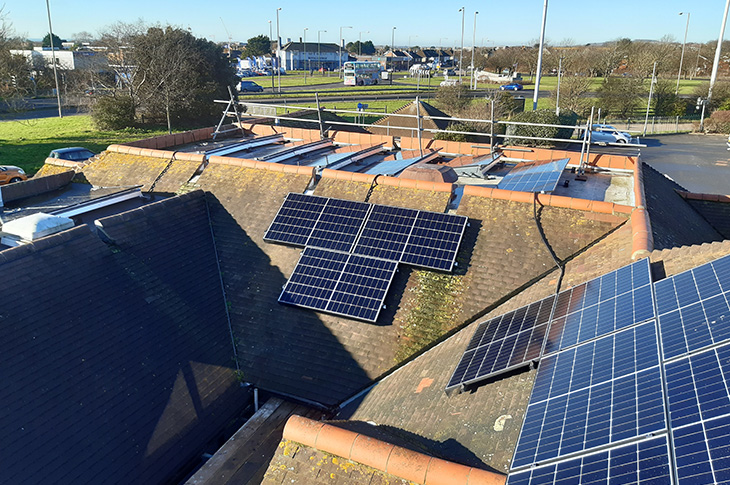
Photo: Air source heat pumps at The Shoreham Centre

Worthing Heat Network
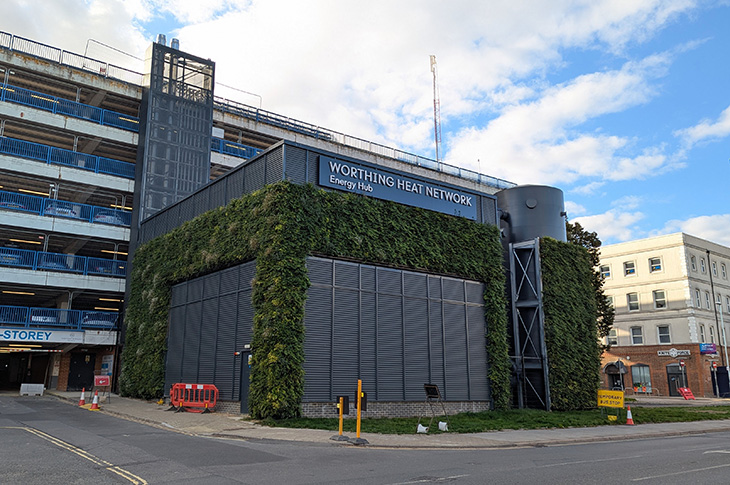
We are developing the Worthing Heat Network with Hemiko, which will provide low-carbon heating to public buildings, venues and homes in the town. Six large public buildings have already been connected, with two more to follow in Winter 2026/27.
We have helped secure millions of pounds in public funding to support the development of the network and further energy-efficiency improvements to public buildings.
For more information, see:
Photo: The Worthing Heat Network energy centre next to the High Street MSCP in Worthing
Our Carbon Management Plan
In February 2024, we adopted our latest Carbon Management Plan, setting out how we will work towards becoming a carbon neutral organisation by 2030.

Our latest carbon emissions report to our Joint Strategic Committee is available below:
Working towards net zero across Adur and Worthing
Becoming a carbon neutral organisation by 2030 is only part of the challenge.
We have also committed to helping Adur and Worthing become a net zero area by 2045. This wider ambition covers emissions from homes, transport, businesses and other activities across the area.
This will be significantly more challenging than reducing emissions from our operations. It will require collective action from residents, businesses, community organisations and public sector partners, alongside substantial investment and strong support from the government.
Working with our communities and partners
To help reduce emissions across Adur and Worthing, we have:
- Continued working with the West Sussex Affordable Warmth Partnership to support home energy efficiency measures, including grant schemes for vulnerable households. Find out more on the:
- Supported residents through affordable warmth initiatives.
- Participated in three rounds of Solar Together West Sussex, a group-buying scheme for solar panels.
- Joined UK100, a national network of local authorities committed to the transition to clean energy, and pledged to take action on carbon emissions across Adur and Worthing. Find out more on the:
- Commissioned a SCATTER study to better understand greenhouse gas emissions across Adur and Worthing and identify pathways towards the area's net zero target. The study is available below:
What happens next?
Reaching our 2030 target for the organisation and the 2045 area-wide target will require continued investment, innovation and collaboration.
We will continue to reduce emissions from council buildings, vehicles and operations while working with communities, businesses and partners to support the wider transition to a net zero Adur and Worthing.
Useful links
- Adur & Worthing Councils have pledged to be carbon neutral for the emissions it controls by 2030 - Joint Strategic Committee report - 9th July 2019 (PDF)
- West Sussex County Council (WSCC) Climate Change Strategy 2020/30 - on the WSCC website
- Low carbon business in West Sussex - why do we need to act? - on YouTube
- UK Business Climate Hub website

Need assistance with this service?
Get in touch:
Sustainability

Problem with this page?
Page last updated: 12 October 2026