

Downland Nature Corridor
Restoring our downland
We have committed to helping create a network of green corridors across Adur and Worthing, enabling wildlife to move more freely between the natural spaces we all value.
Together with our partners, we're working to create a strong ecological link through Adur and Worthing, connecting South Downs National Park with our urban and coastal areas.
Our Vision for Nature is to not only support wildlife, but make it easier for people to enjoy nature and the many benefits green spaces bring to our health and wellbeing.
Here you can find out more about the work happening across our much-loved downland to restore valuable habitats and protect local landscapes for future generations.
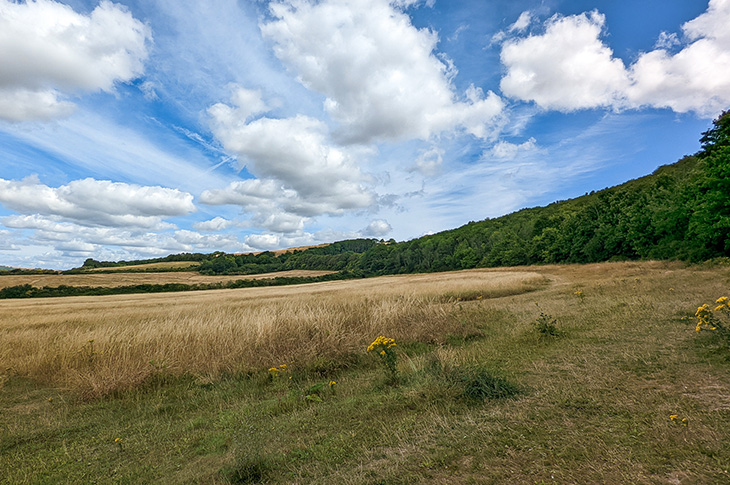
Photo: Cissbury Fields, Worthing
About the nature corridor
We are working with partners to restore and enhance chalk grassland habitats across Adur and Worthing, facilitating the movement of rarer species and preserving the unique landscape and character of the South Downs.
Chalk grassland is a flower-rich landscape primarily found in southern England. When thriving, it's an internationally important habitat capable of supporting a wide range of wildlife, including birds, insects and plants.
The initial focus for the corridor is to develop a vision for the Cissbury landscape, which includes our current land holdings at Cissbury Fields, Tenants Hill and Mount Carvey.
We're developing a partnership with South Downs National Park Authority, Sussex Wildlife Trust and National Trust to create an integrated vision for the area.
The three council-owned sites are close to Cissbury Ring, a significant historical and environmental landmark which is owned and managed by the National Trust.
Each site hosts chalk grassland, but conservation work is needed to unlock their full potential and ensure they are complimenting Cissbury Ring as a haven for wildlife. Plans are being developed for these spaces, with more information available in the section below.
This video explains more about chalk grassland across the South Downs National Park:
We are also committed to protecting Lancing Ring for future generations, having completed an operation to plant more than 4,000 trees and dozens of plants across its woodland.
Further east in Shoreham, we are also working on a project to restore the chalk grassland at Mill Hill. We own and manage the local nature reserve in partnership with South Downs National Park Authority, and have been using animals to naturally manage the land.
We are fortunate to have many designated nature sites across our downland landscape, many of which are owned by our partners. There are also privately-owned sites, such as golf courses, that are making great strides to make their land more environmentally friendly.
Together, these sites and projects are creating a connected South Downs that makes it easier for birds, pollinators and other wildlife to thrive, while also protecting the places so many of us love to experience for many years to come.
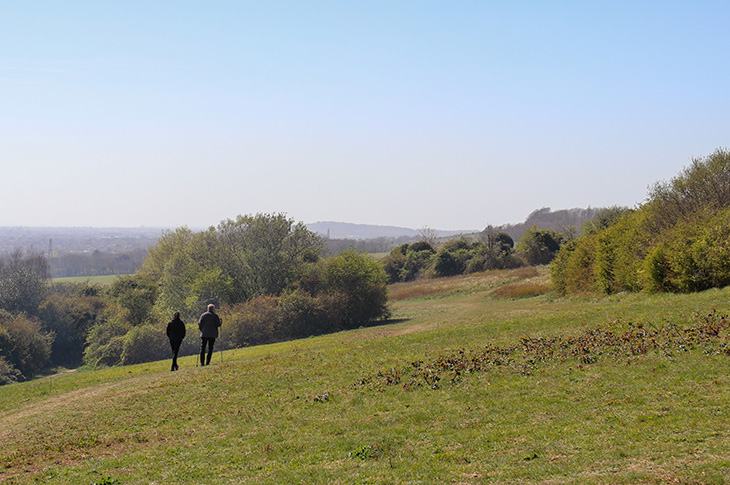
Photo: People walking at Lancing Ring
The Cissbury Landscape
We are taking a joined-up, landscape-scale approach to the Cissbury area - bringing together sites including Cissbury Ring, Cissbury Fields, Tenants Hill and Mount Carvey, alongside surrounding land.
In partnership with South Downs National Park Authority, Sussex Wildlife Trust and the National Trust, we're developing a coordinated vision to restore and reconnect this important landscape - supporting nature recovery while enhancing access and wellbeing.
At Cissbury Fields, we are working to revive its chalk grassland landscape, which hasn't been able to flourish due to years of farming. We took back control of the site in 2021 and are on a mission to bring the fields back to life with our nature partners, ecologists and the community most connected with the fields.
As part of this, we are progressing proposals for conservation grazing, with a small herd of cattle - supplied by Sussex Wildlife Trust - helping to naturally manage the grassland as it recovers. Supporting infrastructure such as fencing, gates and water sources is also being planned to enable this approach, while maintaining full public access across the site.
Alongside nature recovery, improving the visitor experience for people remains a key priority for us. Plans include better-defined paths and entrances, as well as measures to address issues such as dog fouling, ensuring the site can be enjoyed responsibly by everyone.
These proposals build on extensive engagement with the local community and stakeholders, and form part of a wider funding application to support the long-term restoration and management of this important downland site.
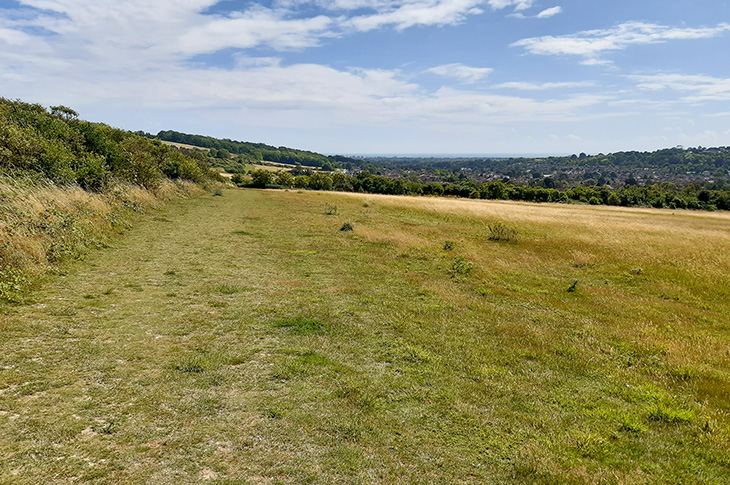
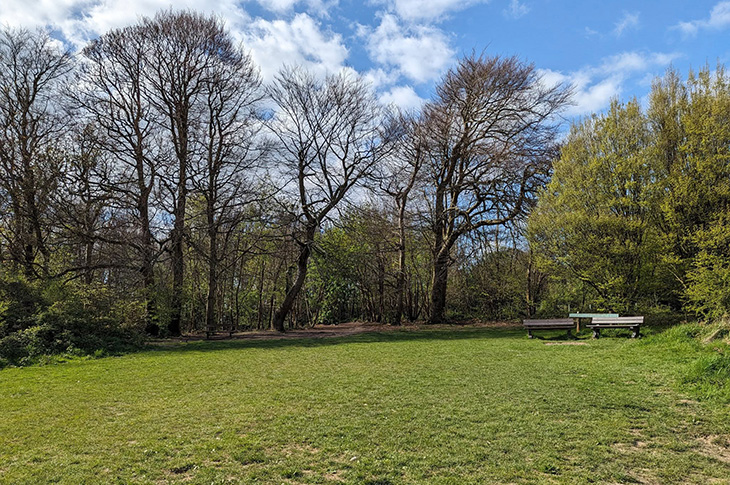
Photo: Cissbury Fields, Worthing
At Tenants Hill, there is a significant opportunity to secure the long-term future of the site for nature. Sussex Wildlife Trust has expressed an interest in acquiring the land to deliver a programme of habitat restoration, with the aim of transforming it into high-quality chalk grassland. This would be achieved in part through conservation grazing, creating the conditions needed for species such as skylarks, Adonis blue butterflies and plants like the round-headed rampion, also known as the Pride of Sussex, to thrive.
Tenants Hill also plays an important role as a gateway to South Downs National Park, and any future plans will ensure that public access is retained. The site is dedicated for open access under the Countryside and Rights of Way Act, meaning it will continue to be a space where people can enjoy the landscape, alongside new opportunities for volunteering and community involvement.
A decision on Sussex Wildlife Trust's proposal to purchase the site is expected in Summer 2026. For more information, see:
Alongside this, we are exploring how Mount Carvey can contribute to the wider vision - helping to link habitats, support biodiversity and create a more resilient network of green spaces across the area.
By bringing sites across the wider landscape together under a shared vision, we can move beyond isolated interventions and instead deliver lasting change at a landscape scale - creating a Cissbury landscape that is richer in nature, better connected, and valued by both wildlife and people for generations to come.
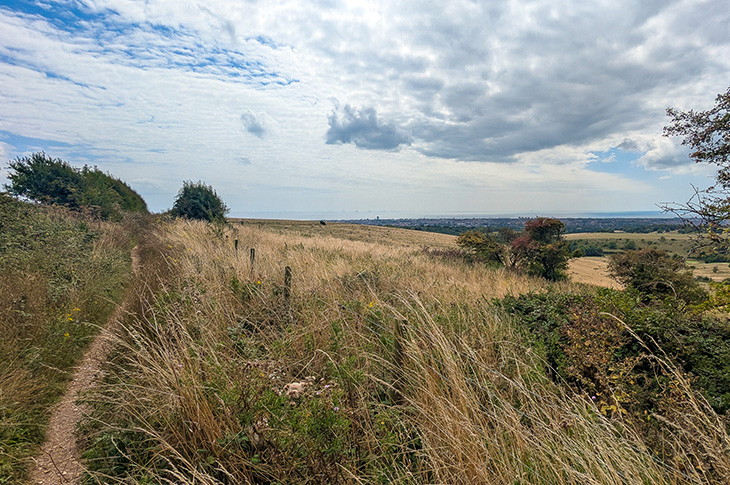
Photo: The Tenants Hill site in Worthing
Preserving Lancing Ring
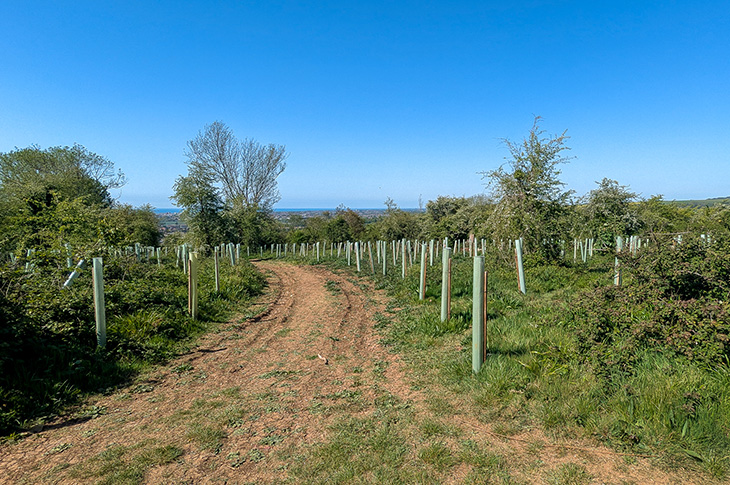
At Lancing Ring, we've completed a major programme of tree planting to help secure the future of this much-loved nature reserve.
Thousands of trees and plants have now been planted across the site, covering around five hectares - roughly the size of seven football pitches. This large-scale effort is helping to restore areas affected by tree loss while creating new habitats for wildlife to thrive.
The project has brought together our parks team, volunteers, local schools and community groups, all working side by side to plant a diverse mix of species. These include native and resilient trees such as oak, hornbeam and alder, alongside hazel, birch and fruit trees, carefully chosen to strengthen biodiversity and improve the woodland's long-term resilience.
A significant number of trees were provided through support from The Tree Council, working in partnership with National Highways as part of their national tree planting initiative. We have also directly funded additional planting as part of our wider commitment to protecting and enhancing green spaces across Adur and Worthing.
Photos: Lancing Ring - tree planting in progress and when completed
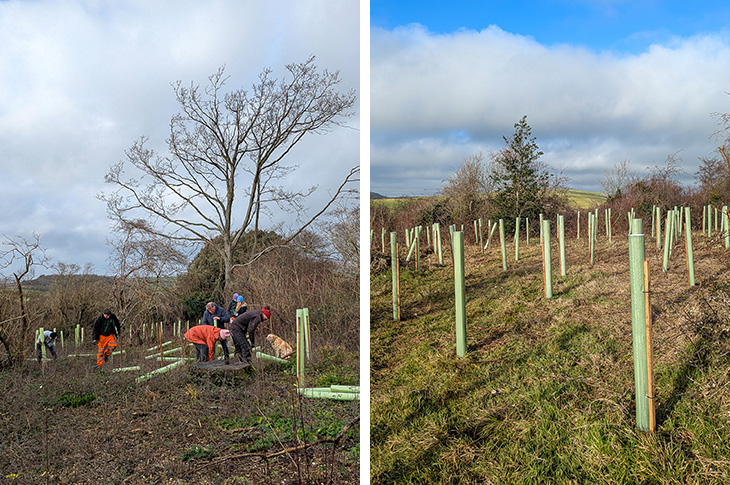
This work follows a challenging period for Lancing Ring. Like many woodlands across the UK, the site has been heavily impacted by ash dieback, which has led to the loss of large numbers of ash trees. While necessary felling has helped keep paths safe for visitors, it has also made clear the importance of restoring and future-proofing the woodland.
With planting now complete, Lancing Ring is entering a new phase - one focused on nurturing these young trees as they establish and grow. Over time, they will help shape a healthier, more resilient landscape for wildlife and for the community to enjoy.
This project is a key part of our long-term vision to protect and enhance our natural spaces, ensuring that Lancing Ring can be enjoyed by future generations for years to come.
Photo: Lancing Ring - completed tree planting
Restoring Mill Hill
At Mill Hill in Shoreham, we have taken a natural approach to manage the land and, in turn, restore its precious chalk grassland landscape.
The local nature reserve, which we own and manage in partnership with South Downs National Park Authority, is one of only a small number of sites in the region to have retained its chalk grassland - an internationally important habitat for biodiversity.
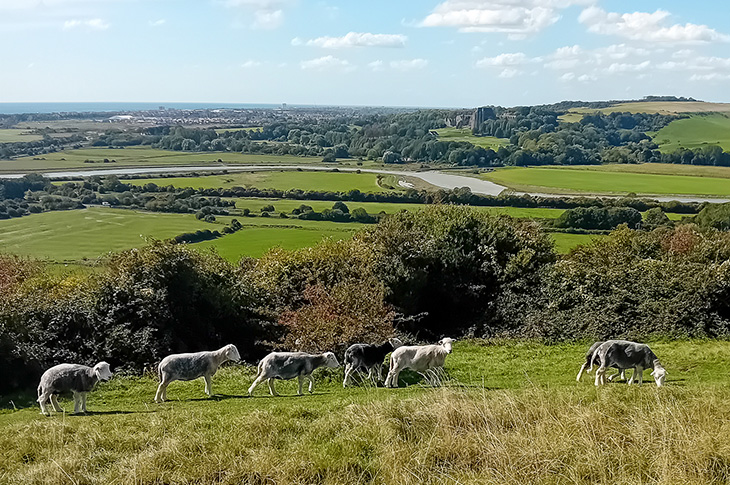
To help care for the landscape, we have introduced a flock of Herdwick sheep to tackle the overgrowth and invasive species that had begun to dominate the grassland.
This process, known as grazing, is a slower, gentler form of land management that uses livestock such as sheep or cattle. It's more accommodating to wildlife and far kinder to the steep slopes at Mill Hill than using heavy machinery.
The sheep are due to return this winter to continue their maintenance, and while at Mill Hill were supported by a fantastic group of local volunteers who kindly helped keep an eye on the flock while enjoying the area.
We also extend our thanks to the wider community. The care shown by visitors - particularly dog walkers and motorists - plays an important role in making conservation grazing possible and successful.
We're proud of the positive impact this work is having as part of our wider efforts to restore our downland, and we look forward to continuing this approach in the future.
Photo: Mill Hill, Shoreham - sheep grazing on the hill (with the River Adur in the distance)
Our amazing partners
Restoring and protecting our downland is a shared effort, and we are proud to work alongside a wide range of partners who help care for these special places.
At the heart of the Cissbury landscape, National Trust manages Cissbury Ring - one of the most significant historical and environmental sites in the area. Their work helps ensure the site remains rich in wildlife while continuing to welcome visitors to enjoy its unique heritage and views. The trust also manages Highdown Hill, situated just north Highdown Gardens - our much-loved chalk gardens in Worthing.
The South Downs are also supported by many volunteers, such as the Friends of Lancing Ring, who have supported the management of the local nature reserve for decades. Their dedication has been vital in maintaining the site, and more recently they played an important role in supporting our large-scale tree planting project - helping to secure the woodland's future for generations.
At Mill Hill Local Nature Reserve, we work in close partnership with South Downs National Park Authority to manage and restore this rare chalk grassland habitat. Together, we are using approaches such as conservation grazing to enhance biodiversity while protecting the landscape's natural character.
We're fortunate to also have private organisations across the South Downs who share our commitment to sustainability. Worthing Golf Club is taking positive steps to reduce its environmental impact - creating new pollinator-friendly areas, transitioning to electric greenkeeping machinery to cut carbon emissions, and introducing systems to collect and reuse water more efficiently.
By working collaboratively across public, voluntary and private sectors, we are building a stronger, more connected approach to land management - helping to restore the downland landscape while ensuring it remains accessible and enjoyable for residents and visitors alike.
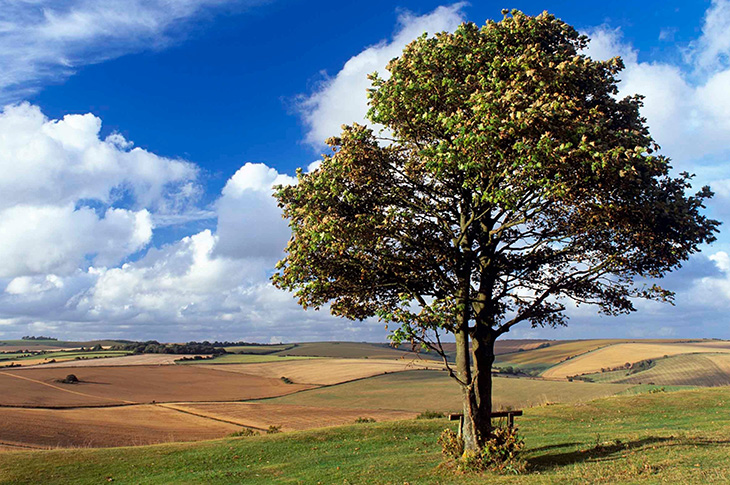
Photo: View over Cissbury Ring in summer (© National Trust Images/David Sellman)
Volunteering across the corridor
Volunteering is a great way to make a positive contribution to our downland. You can learn new skills, make friends and share or improve your knowledge of nature and conservation.
Below are link to external websites with just a few of the opportunities available:
- Volunteering with South Downs National Park Authority
- Volunteering with the National Trust
- Volunteering with Sussex Wildlife Trust
- Join the Friends of Lancing Ring
- Volunteering at Highdown Gardens
Photo: Lancing Ring (credit - Friends of Lancing Ring)
Links to our partners and projects
Huge thanks to all our partners, community groups and volunteers who help make the sites across the corridor a better place for everyone and nature to enjoy:
Page last updated: 15 May 2026