

Worthing Heat Network
About the heat network project
We are working in partnership with low-carbon energy company Hemiko to deliver the Worthing Heat Network - a pioneering scheme that will bring sustainable heating to buildings and homes in the borough.
Hemiko, formerly known as Pinnacle Power, will design, build and operate the network, which forms a key part of our commitment to become a carbon neutral local authority by 2030 and a net zero area by 2045.
Heat networks are an alternative to gas boilers and provide heating and hot water to homes and buildings through a network of insulated underground pipes.
Although heat networks are relatively new to the UK, they are common in Scandinavia and are expected to become increasingly popular as more towns, cities and countries look to meet their carbon targets.
The first phase of the Worthing Heat Network alone is estimated to cut the town's carbon emissions by 3,000 tonnes a year - a figure equivalent to taking more than 2,000 cars off the road. Air quality will also be improved through its introduction.
Public buildings across Worthing's town centre are connecting to the network first. As the project progresses, more buildings and homes will have the opportunity to join.
Hemiko, with the support of government grants, is investing £500m into the project, which is supporting the local economy and creating dozens of jobs across the town.
Video: the Worthing Heat Network
What is a heat network?
Heat networks operate by collecting local unused heat, turning it into hot water and distributing that hot water to local users through a network of underground pipes. They are a low carbon replacement for gas boilers, providing both heating and hot water.
Overall, in the right location, heat networks are 40% cheaper than using individual air source heat pumps for each building.
Why have you decided to commission the Worthing Heat Network?
In 2019, we identified the Worthing Heat Network as the most economic and efficient way to decarbonise the town's civic quarter.
It will enable connected buildings to reduce their reliance on fossil fuels for heating and hot water, reducing their heating emissions by around 90%.
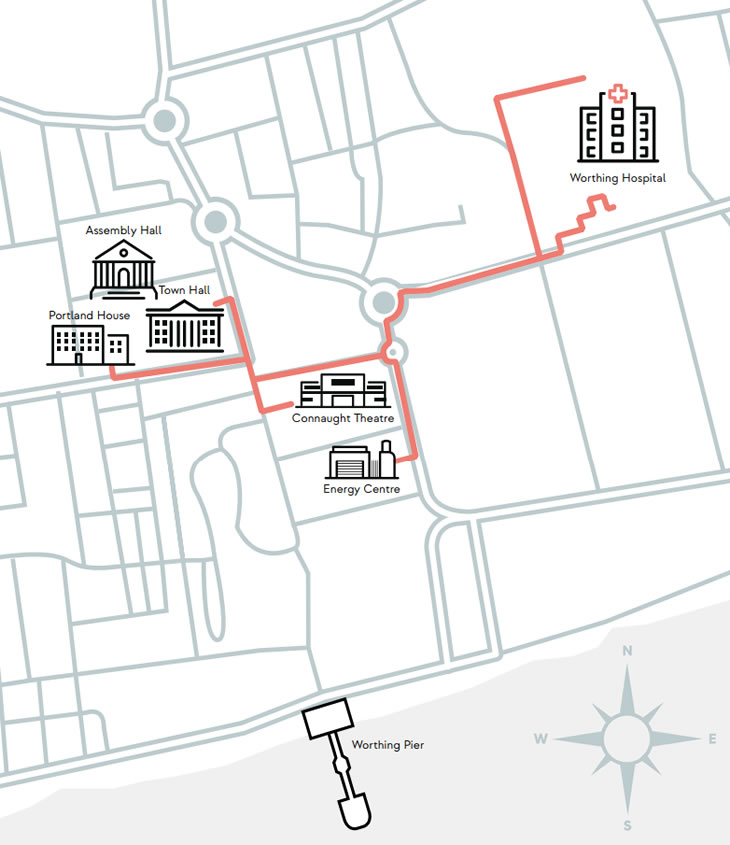
Map: Worthing Heat Network area - first phase (credit Hemiko)
Which buildings are connecting to the Worthing Heat Network first?
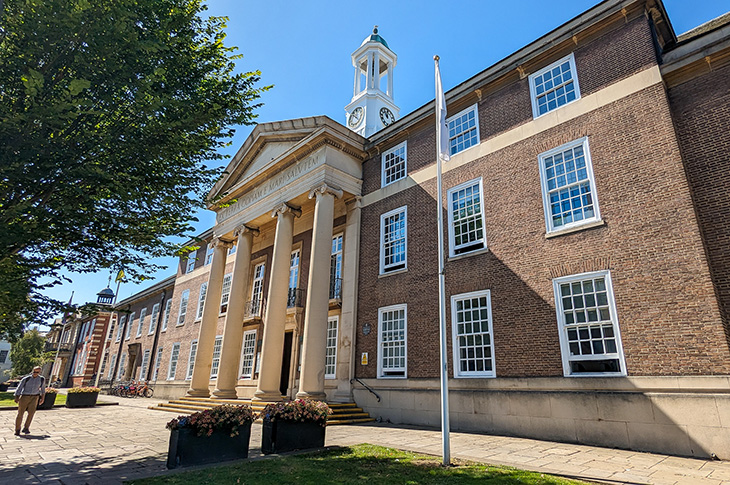
Worthing Town Hall, Worthing Hospital, Assembly Hall, Portland House, Worthing Museum & Art Gallery, and Connaught Theatre have connected to the network as part of the first phase of construction works.
Photo: Worthing Town Hall
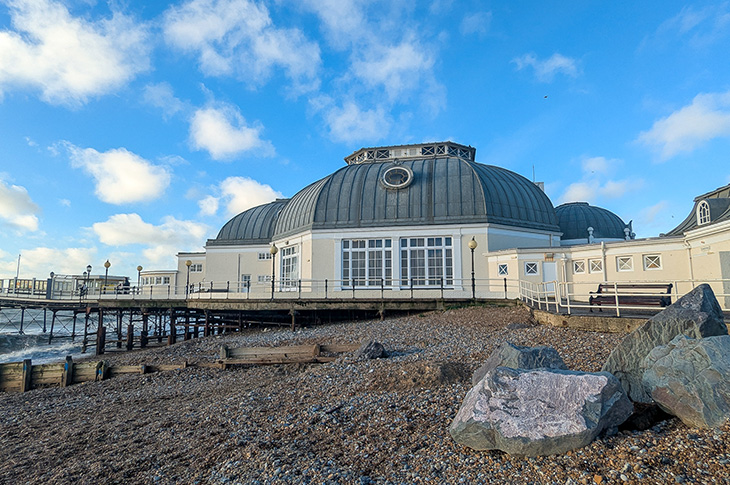
The next buildings to connect will be Splashpoint Leisure Centre and Pavilion Theatre, which are connecting as part of the second phase of construction works. Once these buildings have connected, the main spine of the town centre network will be complete.
Photo: Splashpoint Leisure Centre
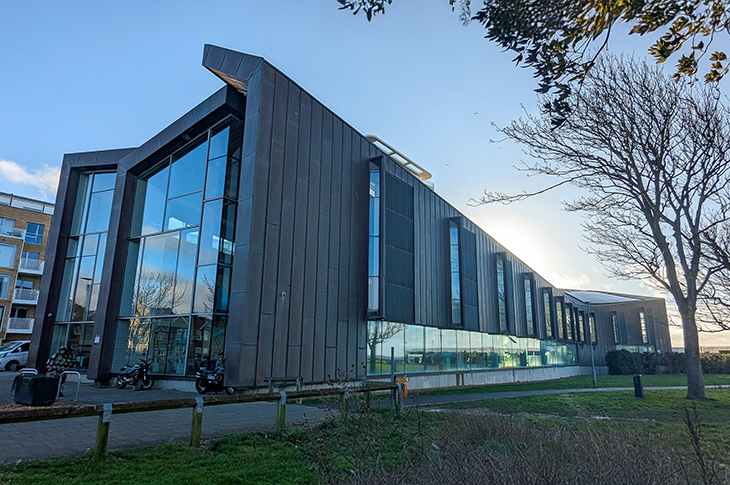
Photo: Pavilion Theatre
How long will the Worthing Heat Network take to build?
The first phase of the project has now been completed. Work began in Summer 2024 and the main works concluded towards the end of 2025.
The second phase of the project, which will see Splashpoint Leisure Centre and Pavilion Theatre connected, is due to begin in January 2026 and is expected to be complete ahead of the school summer holidays this year.
Hemiko has said it will offer a connection to every building in the town by 2050.
What do Hemiko's works involve?
To bring the Worthing Heat Network and its decarbonising benefits to life, a range of infrastructure, both underground and above, needs to be developed.
Hemiko is digging up roads and pavements across the town to install its network of underground pipes. The low-carbon energy company is working closely with West Sussex County Council to ensure that construction causes as little disruption as possible.
Throughout Hemiko's works, there are various traffic management programmes in place, to protect both road users and working operatives. The works can result in lane closures, temporary traffic lights, one-way diversions and road closures.
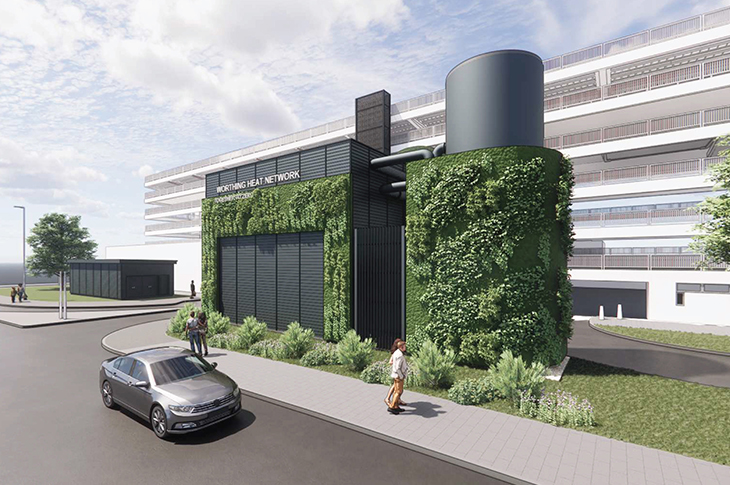
Energy Hubs, which house the heat pumps, thermal store and other equipment, will also need to be built across the borough - the first of which is sited next to High Street multi-storey car park. Other energy centres will need to be built further out of the town centre to expand the network across Worthing.
Hemiko aims to sequence its works to help keep traffic moving and enable the town centre to thrive in its busiest periods.
Image: Artist's impression of the energy centre in High Street, Worthing
What's the cost of the Worthing Heat Network?
Following our application to the government's Public Sector Decarbonisation Scheme, we were awarded more than £7m of grant funding to contribute to the Worthing Heat Network. This unlocked £40m of investment from Hemiko, and it plans to invest around £500m by 2050 as the network expands.
As part of our £7m award from the government, we are required to match fund the grant with a £3.2m investment that is going towards modernising our public buildings. This is seeing more energy efficient windows, doors, insulation and heating systems installed.
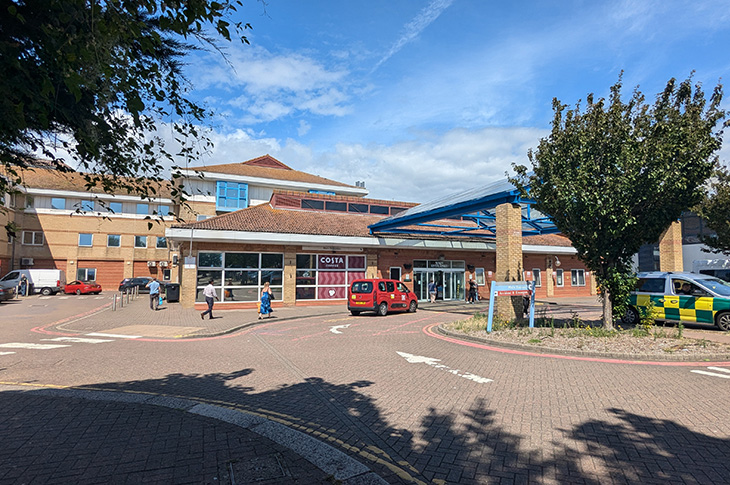
The NHS has also received approximately £19m in funding from the government to connect Worthing Hospital to the heat network.
Photo: Worthing Hospital
When can residents connect to the Worthing Heat Network?
When you can connect to the heat network will depend on how far away you are from the network, and how many other buildings in your area also want to connect at a similar time. Over the first few years the focus will be on connecting larger buildings, including new housing developments. Other residential properties nearer the town centre are expected to be offered a connection in the next five to ten years.
Will businesses and residents looking to connect get a fair offer?
To ensure the heat network delivers a quality, valuable service for Worthing, we have established a governance agreement with Hemiko, which binds the company to providing low carbon heat at a fair price and with excellent customer services.
As from 2025, regulations now also apply in the heat network market, giving customers added protection.
How many jobs have been created by the Worthing Heat Network?
The first phase of the Worthing Heat Network has created around 40 local jobs. By 2050, Hemiko expects the network to have created up to 500 jobs.
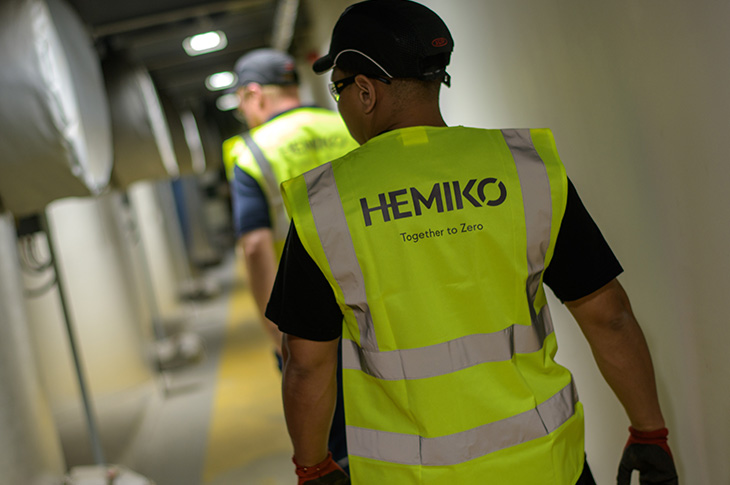
Photo: Hemiko staff wearing hi-vis (copyright Hemiko)
Timeline for the project
Phase two is the next stage of the project, and will see Splashpoint Leisure Centre and Pavilion Theatre connected. Preparatory works are expected to get underway in January 2026, and the main works are due to be completed by the school summer holidays.
Hemiko is engaging with local stakeholders to minimise disruption as much as possible. As with any roadworks, the final programme of work will be subject to approval by West Sussex County Council as the highways authority.
For more information see:

Need assistance with this service?
Get in touch:
Place & Economy Team

Problem with this page?
Page last updated: 21 January 2026